Here’s a number that should reshape how you budget for ERP: over a system’s lifetime, Odoo support and maintenance typically costs more than the original implementation. Implementation is a one-time project; support is a permanent commitment. Yet most businesses obsess over the rollout quote and barely think about what happens on day 366 — when the consultants have moved on, a new Odoo version has shipped, the tax rules have changed, and a custom report has quietly stopped working.
This is the complete 2026 picture of Odoo support and maintenance: why it matters more than ever, the different support models and AMC (Annual Maintenance Contract) plans, exactly what’s included, realistic costs, and how to choose a plan that protects your investment instead of draining it.
Why Odoo Support and Maintenance Matters More in 2026?
An ERP isn’t a microwave you install and forget. It’s a living system that touches every department, and it sits in a world that keeps changing around it. Four forces have made a structured support plan non-negotiable this year:
- The new 25% legacy fee. Odoo now applies a 25% surcharge on older versions, calculated annually on your subscription cost and applied regardless of whether you’re on a monthly, annual, or multi-year contract. In plain terms: staying on an outdated version is no longer a way to save money — it’s a penalty that can make a legacy release more expensive than simply upgrading. Planned upgrades have shifted from “nice to have” to a budgeting essential.
- Moving compliance goalposts. The UAE’s e-invoicing rollout (Peppol-based, mandatory from 2027) and the 9% corporate tax regime mean your configuration, tax codes, and reporting need ongoing attention. Compliance isn’t a one-time setup; it’s a moving target that a support plan keeps you ahead of.
- Customizations break on upgrade. Odoo ships a major version every year. Every custom module, automation, and integration you’ve built needs to be tested and adjusted against each release — work that simply doesn’t happen on its own.
- Security, backups, and performance. Once your business genuinely runs on Odoo, unpatched vulnerabilities, missing backups, and creeping slowness stop being IT inconveniences and start being business risks.
The Real Cost of “We’ll Deal With It Later”
Plenty of businesses go live, wave goodbye to their implementer, and decide they’ll handle support “internally” or “when something breaks.” On paper it looks like a saving. In practice, it’s where ERP value quietly leaks away.
Without ongoing Odoo support and maintenance, small issues compound. A failed overnight sync nobody noticed becomes a week of wrong stock figures. A skipped upgrade becomes a painful, high-risk migration two years later — now with that 25% surcharge attached. An undocumented customization becomes a black box no one dares touch. Meanwhile, the people who built the system have left, taking the knowledge with them. The cruel irony is that the companies most likely to skip support are the ones who can least afford the downtime when something finally gives way during a month-end close or a tax deadline.
Pro tip: The cheapest support plan is the one that prevents the outage you never had. Reactive “break-fix” always looks cheaper until the first emergency — then the math flips fast.
5 Signs You Need an Odoo Support or AMC Plan
Not sure whether you’ve reached the point of needing a formal plan? If three or more of these sound familiar, you have:
- Nobody owns the system. Issues pile up because support is “everyone’s job,” which means it’s no one’s job.
- You dread upgrading. You’re stuck on an older version because nobody is confident the customizations will survive the jump.
- The change requests never stop. Users keep asking for tweaks, new reports, and automations, and they queue up with nowhere to go.
- No one is watching the basics. Backups, performance, and security patches aren’t actively monitored by anyone.
- Compliance catches you off guard. VAT, corporate tax, and e-invoicing changes arrive as fire drills rather than planned updates.
Odoo Support Models Compared
Not every business needs the same level of cover, and overpaying for a heavyweight plan is as wasteful as underpaying and getting caught out. Most partners structure their AMC offering into tiers. Here’s how the common ones stack up:
| Plan | What’s Covered | Best For |
|---|---|---|
| Essential (Break-fix) | Bug fixes, reactive support, basic updates | Small, stable setups with light usage |
| Growth (Proactive AMC) | Everything in Essential + monitoring, backups, minor enhancements, functional support, training | Growing SMEs that depend on the system daily |
| Enterprise (Managed) | Everything in Growth + priority SLAs, version upgrades, a dedicated hours bank, and custom development | Complex, multi-entity, or compliance-heavy operations |
The jump that matters most is from Essential to Growth — that’s the line between reacting to problems and preventing them. Break-fix plans only spring into action once something has already failed, which means you absorb the downtime first and pay for the fix second. Proactive plans monitor, patch, and tune before issues surface, so the failures that would have hit you simply never happen. The Enterprise/Managed tier adds guaranteed response times and bundled upgrade and development hours — essential once your ERP is mission-critical and any downtime carries a real cost.
What an Odoo AMC Actually Includes?
“Support” is a vague word, so before you sign anything, get specific about scope. A genuine Annual Maintenance Contract should cover two distinct sides of the system — technical and functional.
1. Technical maintenance
- Bug fixes and error resolution
- Security patches and vulnerability management
- Performance tuning and database optimization
- Automated backups and tested recovery procedures
- Server, hosting, and Odoo.sh monitoring with uptime alerts
- Version upgrades and customization compatibility testing
2. Functional support
- Day-to-day user support and troubleshooting
- Configuration changes as your processes evolve
- New reports, dashboards, and automations
- Ongoing user training and onboarding for new staff
- Compliance updates (VAT, corporate tax, e-invoicing)
Pro tip: Keep every customization documented from day one. Undocumented custom code is the single biggest reason upgrades become slow and expensive — and it’s the first thing a good AMC partner will insist on maintaining.
Break-Fix vs Proactive: The Real Economics
On a spreadsheet, break-fix wins — you only pay when you call. But that model has a hidden assumption: that problems are rare, small, and conveniently timed. They rarely are. ERP issues cluster around the busiest, highest-stakes moments — month-end close, payroll runs, VAT filing, peak sales season — precisely when you can least afford to wait in a support queue and pay premium emergency rates.
Proactive AMC flips the economics. Instead of paying to recover from incidents, you pay a predictable fee to prevent them. Monitoring catches the failed sync before it corrupts a week of data. Scheduled upgrades keep you off the 25% legacy surcharge. Documented customizations make every future change cheaper. Over a full year, businesses that invest in proactive support almost always spend less in total — and sleep a great deal better — than those nickel-and-diming break-fix calls.
How to Choose the Right Plan?
Match the plan to how critical Odoo is to your operations and how much it’s been customized. A few practical questions to guide the decision:
- How much downtime can you tolerate? If an hour offline costs you real money, you need guaranteed SLAs, not best-effort support.
- How customized is your system? Heavy customization means more upgrade and maintenance work — push toward a managed plan.
- How fast are you changing? Rapid growth, new branches, or new compliance requirements all generate change requests that a bundled hours plan handles smoothly.
- Do you have internal capability? A capable in-house admin can lean on a lighter plan; if you have none, the AMC is your IT team.
Pro tip: Don’t buy on price alone — buy on response time and scope. A cheap plan with a 5-day response window is worthless when you’re locked out during a tax deadline.
Odoo Support and Maintenance by the Numbers
Every business is different, but these realistic 2026 planning figures will help you budget:
- Annual support and ongoing development: roughly $5,000 to $50,000+ per year for small to mid-sized businesses, scaling with customization, user count, and plan tier. Larger enterprise deployments run higher.
- Odoo.sh hosting: from around $60/month for a small project (1 worker, ~20 GB) to about $240/month for a mid-market setup (4 workers, ~100 GB), and more for larger workloads.
- AMC retainers: commonly priced as a percentage of your implementation/customization investment per year, or as a fixed monthly retainer with a defined bank of hours.
- The 25% legacy surcharge: applied annually on the subscription cost of older versions — a direct incentive to budget upgrades in rather than defer them.
For the full cost picture across licensing, implementation, and support, see our detailed Odoo implementation cost guide.
Watch-out: The Community Edition is free to license but never free to operate. Hosting, security, backups, upgrades, and development all still need owning — that’s exactly what an AMC exists to cover.
Community vs Enterprise: Does It Change Your Support Needs?
It changes the mix, not the necessity. Odoo Enterprise bundles official bug fixes, upgrades, and support for standard apps into the subscription — but the moment you add custom modules, third-party apps, or integrations, those become your responsibility (or your partner’s). Community Edition carries no license fee at all, which makes the AMC even more important: with no vendor safety net, your support partner handles everything from hosting and security to upgrades and development. Either way, the system still needs an owner — the question is simply who, and under what agreement.
Support Is Where ERP ROI Is Won or Lost
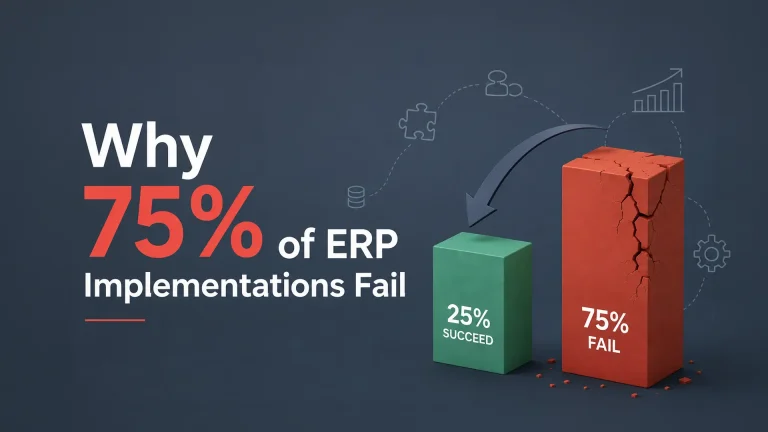
Industry research is blunt on this point: go-live is the start of value realization, not the finish line. Systems that are actively maintained keep compounding returns — faster processes, cleaner data, better decisions. Neglected systems decay until they end up in the ERP failure statistics. A reliable support partner is one of the clearest dividing lines between projects that succeed and projects that quietly underdeliver — see our deeper look at why most ERP projects fail and how to be in the successful 25%.
How to Get the Most From Your AMC?
- Set clear SLAs. Define response and resolution times in writing so expectations are mutual.
- Keep a single point of contact. Funnel requests through one internal owner to avoid duplicate or conflicting tickets.
- Review quarterly. A short quarterly check-in surfaces recurring issues and upcoming needs before they become emergencies.
- Use your hours, don’t hoard them. Bundled development hours are best spent on continuous small improvements, not saved for a crisis.
- Plan upgrades on a schedule. Treat the yearly version as a calendar event, not a surprise — and stay clear of the legacy surcharge.
Common Questions, Answered Fast
1. What’s the difference between Odoo support and an AMC?
“Support” can be ad-hoc, pay-as-you-go help. An AMC is a structured annual agreement with a defined scope, response times, and proactive maintenance — predictable cover for a predictable fee.
2. Do I need an AMC if I use the free Community edition?
Usually yes. Community has no license fee, but you still need hosting, security, backups, upgrades, and development — all of which an AMC handles. The “free” edition is free to license, not free to run.
3. How much should I budget for Odoo support and maintenance?
Most SMEs plan $5,000–$50,000+ per year depending on size, customization, and plan tier — plus hosting, and any upgrade projects driven by the 25% legacy fee.
4. What happens if I skip the yearly upgrade?
You’ll fall onto an older version, incur the 25% legacy surcharge, and face a larger, riskier migration later. Regular, planned upgrades are cheaper and far less disruptive than deferred ones.
5. Can a support partner take over a system someone else built?
Yes. A good partner starts with an audit of your version, customizations, and risks, documents what’s there, and then takes over maintenance — even if they didn’t do the original implementation.
Keep Your Odoo Running at Its Best
The right plan turns your ERP from a system you worry about into one you barely think about. We provide proactive Odoo support and maintenance — monitoring, upgrades, compliance, and enhancements — tailored to your setup and version. Explore our delivery approach and our client success stories to see how we keep systems healthy long after go-live.
Book a free Odoo support audit — we’ll review your version, customizations, and risks, then recommend the right AMC plan for your business.