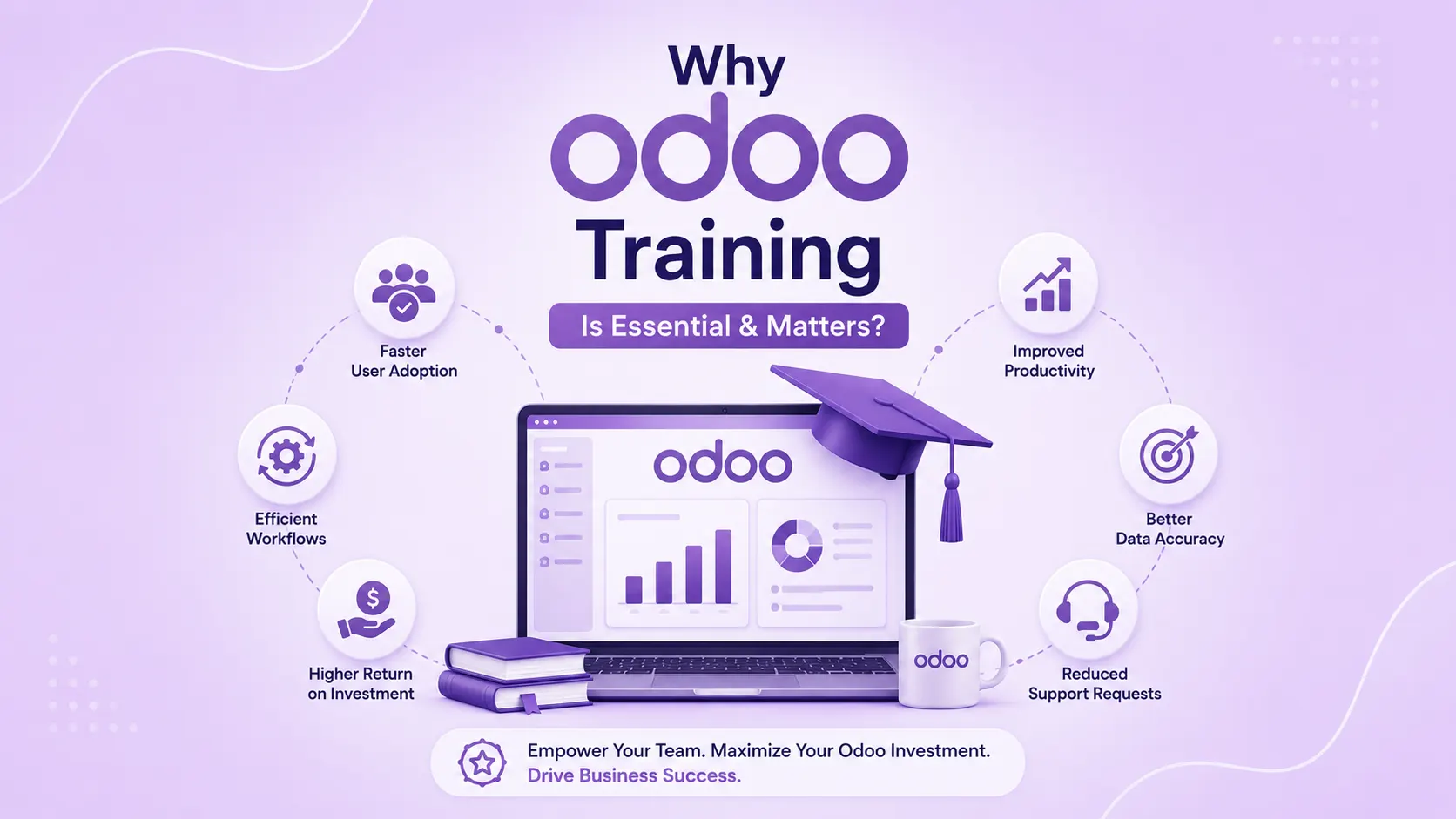
Investing in an ERP system is only part of the journey toward business transformation. The true value of an ERP platform is realized when employees understand how to use it effectively, confidently, and consistently.
Why Odoo training is essential, it necessary because many ERP projects fail to achieve their full potential not because of software limitations, but because users struggle to adapt to new processes and technologies. Without proper training, businesses often experience low user adoption, inefficient workflows, data inaccuracies, and reduced return on investment.
lt is very important to know why Odoo training is essential? Odoo training helps organizations bridge this gap by equipping employees with the knowledge and skills required to maximize the capabilities of their ERP system.
Whether your business is implementing Odoo for the first time or expanding its use across multiple departments, effective training is essential for long-term success.
What Is Odoo Training?
Odoo training is the process of educating users, administrators, managers, and decision-makers on how to effectively use and manage the Odoo ERP platform.
Training programs can cover:
- Odoo navigation
- Module-specific functionality
- Business workflows
- Reporting and analytics
- User permissions
- System administration
- Best practices
- Process optimization
The objective is to ensure employees can confidently perform their daily tasks while leveraging the full capabilities of the system.
Why Odoo Training is Essential & Matters?
Even the most advanced ERP system cannot deliver results if users do not understand how to use it correctly.
Businesses often encounter challenges such as:
- Low user adoption
- Data entry errors
- Inefficient processes
- Incomplete reporting
- Employee frustration
- Reduced productivity
Structured training helps eliminate these issues while improving overall operational efficiency.
Benefits of Odoo Training
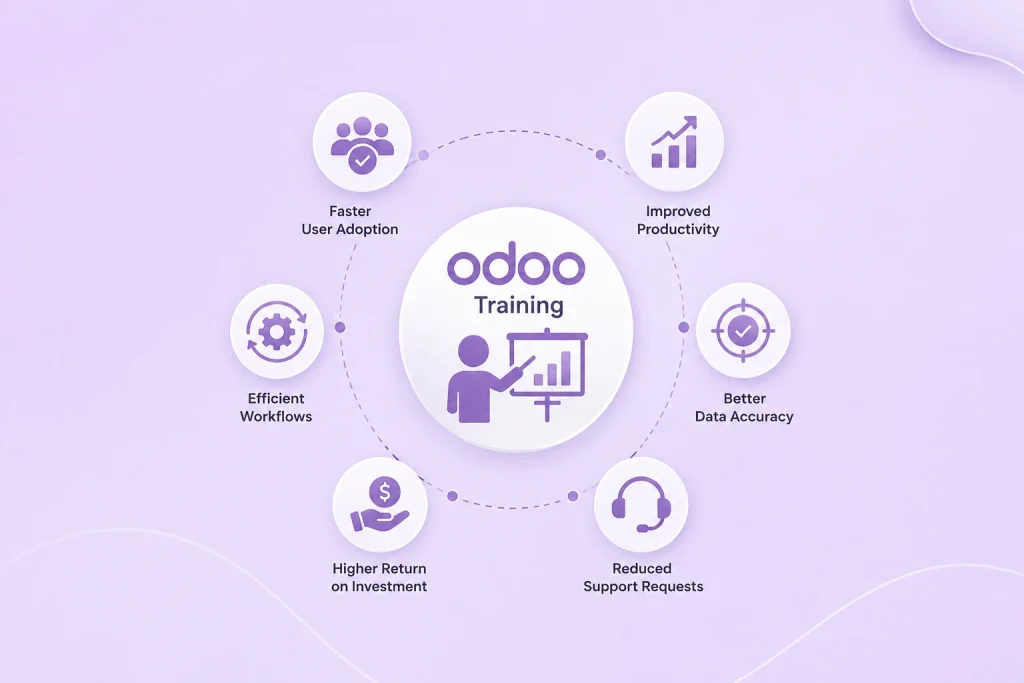
Odoo training helps individuals enhance their skills and gain a better understanding of the platform. If you are wondering why Odoo training is essential, the reasons are explained below point by point.
1. Faster User Adoption
Employees become comfortable with the system more quickly when they receive proper guidance.
Faster adoption reduces resistance to change and improves implementation outcomes.
2. Improved Productivity
Trained users complete tasks more efficiently and make fewer mistakes.
This allows teams to focus on higher-value activities rather than troubleshooting operational issues.
3. Better Data Accuracy
ERP systems rely on accurate data.
Training helps employees understand proper data entry procedures, reducing inconsistencies and reporting errors.
4. Increased Return on Investment
Organizations that invest in user education typically achieve greater value from their ERP systems.
Employees utilize more features and automation capabilities, maximizing system effectiveness.
5. Reduced Support Requests
Well-trained users are more self-sufficient and require less day-to-day support.
This reduces the burden on internal administrators and support teams.
Who Needs Odoo Training?
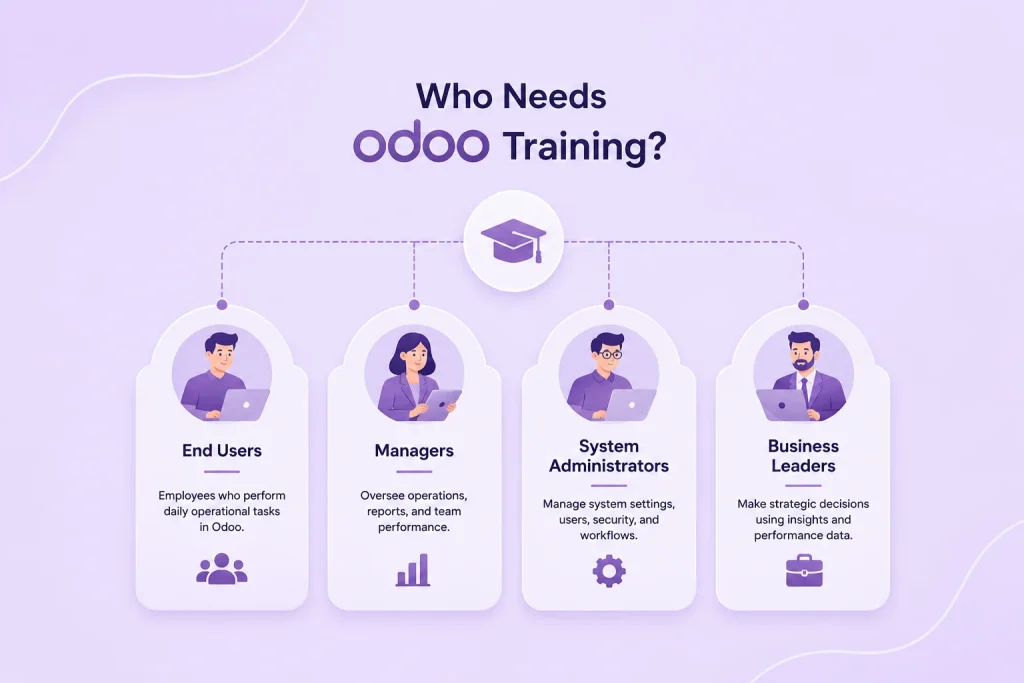
Different users require different levels of training.
1. End Users
Employees who perform daily operational tasks need practical training focused on their specific responsibilities.
Examples include:
- Sales representatives
- Inventory managers
- Accountants
- HR personnel
- Customer support teams
Role-based training improves efficiency and confidence.
2. Managers
Managers require training on:
- Reporting
- Dashboards
- Performance monitoring
- Workflow management
- Decision-making tools
This enables better visibility into business operations.
3. System Administrators
Administrators need deeper technical knowledge, including:
- User management
- Security settings
- System configuration
- Workflow management
- Troubleshooting
Strong administrative skills help maintain system stability.
4. Business Leaders
Executives and decision-makers benefit from understanding:
- Strategic reporting
- Business intelligence features
- Performance tracking
- ERP optimization opportunities
This supports informed decision-making.
Types of Odoo Training
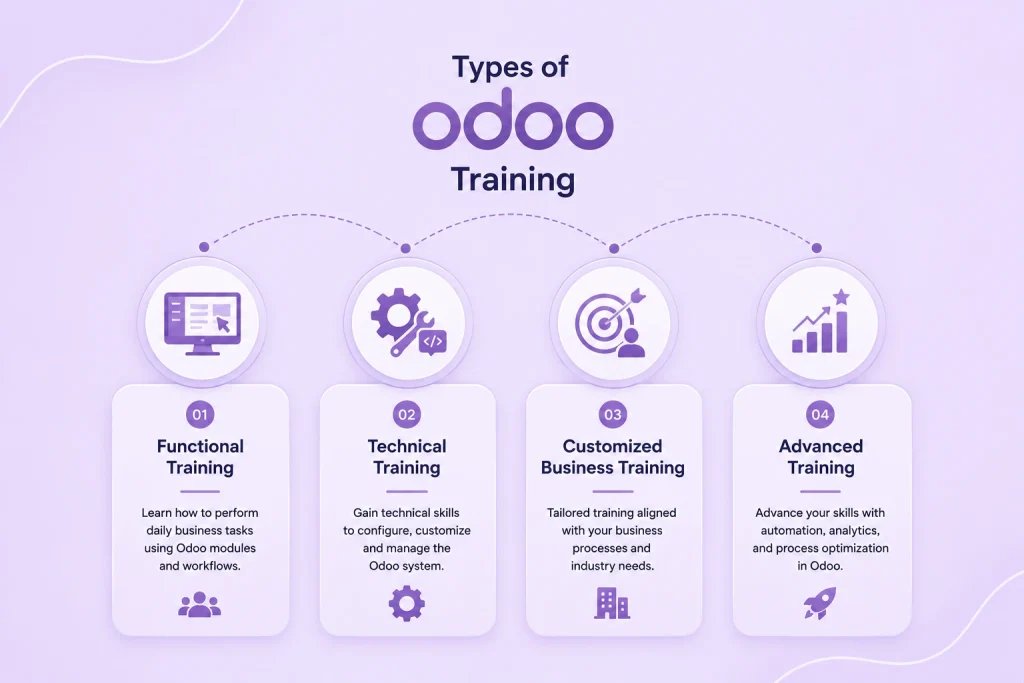
1. Functional Training
Functional training focuses on how users perform daily business tasks within Odoo.
Topics may include:
- CRM management
- Sales operations
- Inventory control
- Purchasing workflows
- Accounting processes
- HR management
This is often the most important type of training for operational teams.
2. Technical Training
Technical training is designed for administrators and technical teams.
Topics may include:
- System configuration
- User permissions
- Module management
- Integration oversight
- Troubleshooting procedures
Technical expertise helps organizations maintain long-term ERP performance.
3. Customized Business Training
Every organization operates differently.
Customized training programs align learning objectives with specific workflows and operational requirements.
This approach often produces higher adoption rates and better business outcomes.
4. Advanced Training
As users become more experienced, advanced training can introduce:
- Automation features
- Advanced reporting
- Process optimization
- Workflow enhancements
- Business intelligence tools
Advanced knowledge helps organizations unlock additional value from Odoo.
Key Areas Covered in Odoo Training
1. System Navigation
Users learn how to navigate the interface efficiently and access the tools they need.
2. Business Workflows
Training demonstrates how different processes operate within the ERP system.
Examples include:
- Lead-to-sale processes
- Procurement workflows
- Inventory movements
- Invoice generation
- Employee management
Understanding workflows improves operational consistency.
3. Reporting and Analytics
Users learn how to access and interpret business reports.
Topics may include:
- Sales reports
- Financial dashboards
- Inventory analytics
- Operational KPIs
- Performance metrics
Data-driven decision-making becomes easier with proper reporting knowledge.
4. Automation Features
Many businesses fail to utilize available automation capabilities.
Training helps users understand how automation can:
- Reduce repetitive tasks
- Improve consistency
- Increase productivity
- Minimize human error
Automation often delivers significant efficiency gains.
Read this article to discover how business process automation works.
Common Challenges Without Odoo Training
Why Odoo training is essential and important will become fully clear after checking the points below.
1. Low User Adoption
Employees may avoid using the system if they do not understand its benefits or functionality.
2. Inaccurate Data
Poor training often leads to incorrect data entry and unreliable reports.
3. Workflow Inefficiencies
Users may develop workarounds that bypass system processes and reduce operational efficiency.
4. Increased Support Costs
Organizations spend more time resolving preventable issues when users lack proper training.
5. Reduced ERP Value
Businesses cannot maximize their ERP investment if employees use only a fraction of available features.
Best Practices for Effective Odoo Training
To fully understand why Odoo training is essential, follow a structured learning approach that combines expert guidance, hands-on practice, real-world projects, and continuous skill development.
1. Start Early
Training should begin before system launch whenever possible.
Early preparation improves confidence and readiness.
2. Use Role-Based Training
Different departments have unique responsibilities.
Training should focus on the tasks users perform most frequently.
3. Combine Theory and Practice
Hands-on learning improves retention and confidence.
Users should practice real-world scenarios whenever possible.
4. Provide Ongoing Learning Opportunities
Training should not end after implementation.
Regular refresher sessions help users stay current and improve their skills.
5. Measure Training Success
Organizations should evaluate:
- User adoption rates
- Productivity improvements
- Error reduction
- Support ticket volume
- Employee feedback
These metrics help identify areas for improvement.
Signs Your Team Needs Additional Odoo Training
Your organization may benefit from additional training if:
- Employees frequently request support.
- Data quality issues persist.
- Reports contain inconsistencies.
- System adoption remains low.
- Processes are being performed outside the ERP.
- New modules have recently been introduced.
Continuous learning helps address these challenges effectively.
Frequently Asked Questions
1. How long does Odoo training take?
Training duration depends on user roles, business complexity, and learning objectives. Programs can range from a few hours to several weeks.
2. Is training necessary for experienced employees?
Yes. Even experienced professionals need training to understand specific workflows and system capabilities within Odoo.
3. Can training improve ERP adoption?
Absolutely. Effective training is one of the most important factors influencing user adoption and long-term ERP success.
4. Should training continue after implementation?
Yes. Ongoing education helps users adapt to new features, process changes, and evolving business requirements.
Building a Long-Term Odoo Learning Culture
Successful organizations view training as an ongoing process rather than a one-time event.
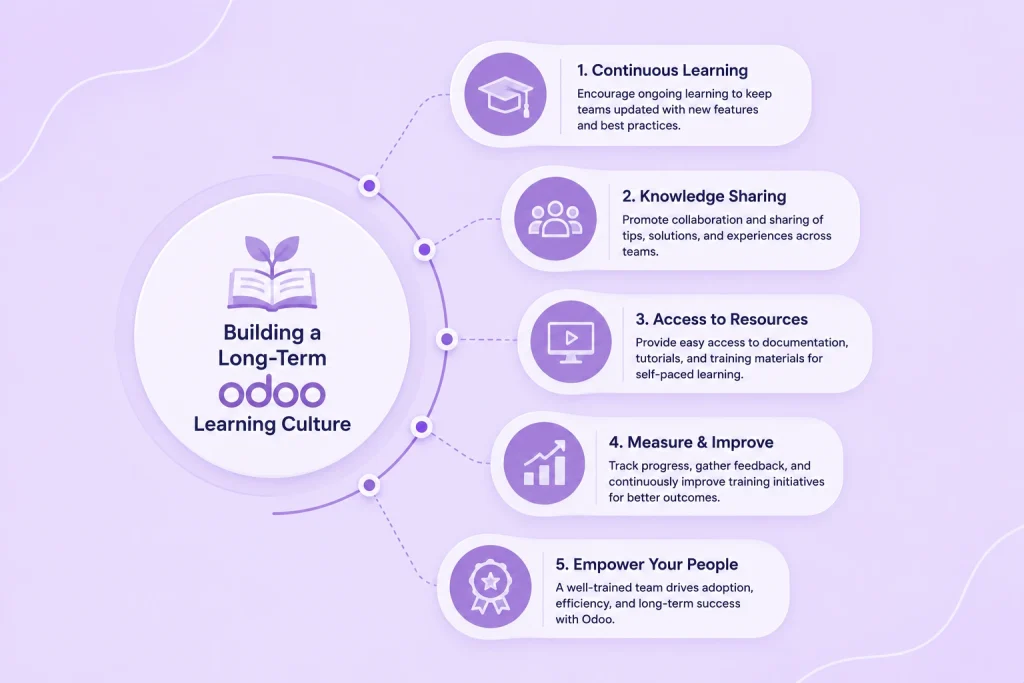
A strong learning culture encourages:
- Continuous improvement
- Process optimization
- Technology adoption
- Knowledge sharing
- Operational excellence
Employees who continuously develop their ERP skills contribute significantly to business growth and innovation.
Conclusion
Odoo training is one of the most important investments businesses can make after implementing an ERP system. Many people ask, ‘why Odoo training is essential,’ but its true value is realized through the knowledge, confidence, and practical skills gained after completing the training.
By providing users with the knowledge, confidence, and practical skills needed to perform their roles effectively, organizations can improve productivity, increase adoption, reduce errors, and maximize the value of their ERP investment.
Businesses that prioritize ongoing education create stronger teams, more efficient operations, and a foundation for sustainable growth.
When employees fully understand how to use Odoo, the ERP system becomes a powerful tool that supports smarter decision-making, improved collaboration, and long-term business success.